
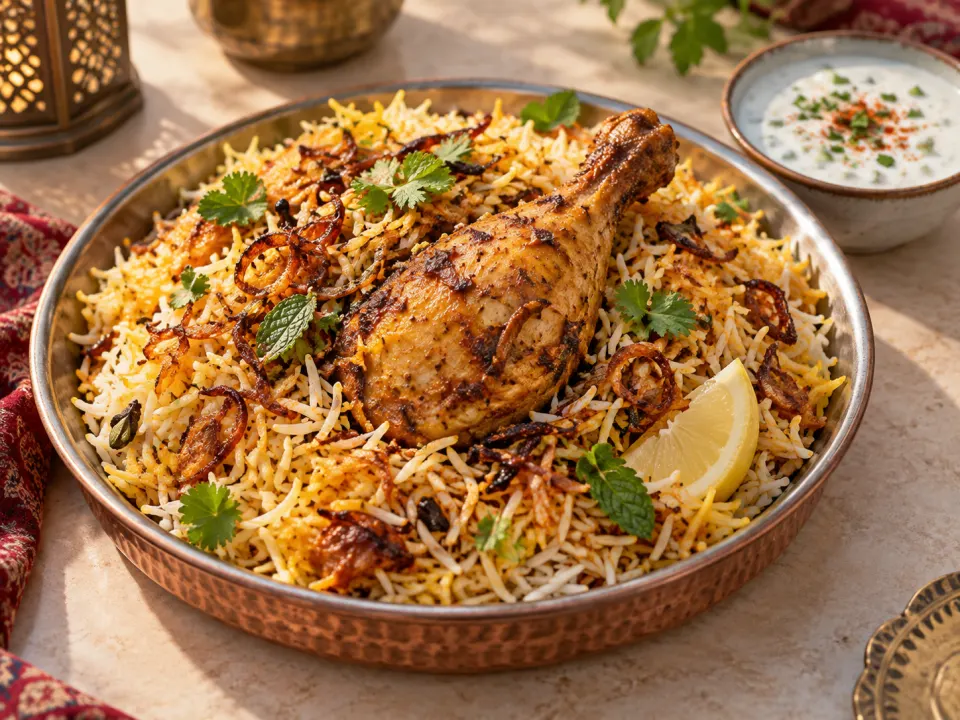
Biryani
Biryani is rice-led and aromatic, often paired with chicken or meat and a cooling accompaniment. Recipe, spice level and portion can differ substantially.
Fried rice
Fried rice is usually wok-cooked with seasoning, vegetables and optional protein. It can pair with a separate Chinese-style main, so check whether the listing is a complete dish or a base.
Noodles
Noodles offer a different texture and often carry sauce throughout the dish. They may be easier to share informally but can soften during a long delivery journey.
Our judgement
Choose biryani for aromatic rice as the centre, fried rice for a versatile base, and noodles when texture and sauce matter most. Avoid adding another heavy starch without a clear reason.
Practical field note
Use sauce, texture and travel time as the decision filters. Biryani is already a complete seasoned-rice format; fried rice may be either a base or a complete protein dish; noodles carry sauce throughout and can soften in transit. A worked example is choosing biryani for a shared, self-contained lunch but fried rice alongside a separate sauced main. The category name does not establish spice level, portion or included protein, and those details must be confirmed.
Seasoning and texture are different decision axes
Biryani builds aroma through seasoned rice and its relationship with meat or vegetables. Fried rice uses wok cooking and distributed seasoning, sometimes as a complete dish and sometimes as a base for a separate main. Noodles shift attention from individual grains to sauce coverage and chew. A diner who says only “I want something spicy” has not yet chosen among these experiences.
Ask whether the dish is dry or sauced, which protein is included, and whether it is intended as a main or accompaniment. “Chicken fried rice” is more complete information than “fried rice”, but it still does not define portion, vegetables, egg or spice level.
Avoid accidental double starch
A rice or noodle dish already makes starch central. Adding fries, bread and another rice side can crowd out the protein and fresh components unless the order is for sharing. Review bundles carefully because a photographed side may already be included. If a separate sauced main is chosen, plain or lightly seasoned rice may support it better than another heavily seasoned dish.
For example, one biryani with a cooling accompaniment can form a complete personal meal. Fried rice plus a Chinese-style chicken main can be shared by two diners if quantities are confirmed. Noodles with a wrap is usually two mains rather than one main and one side.
Travel, leftovers and branch variation
Rice generally travels predictably when packed promptly, while noodles can continue absorbing sauce and become softer. Very dry rice can also lose appeal over a long journey, and steam affects fried additions. Ask the branch which item suits the expected collection or delivery time. Keep hot food away from cold drinks and follow current food-safety advice for storage.
Biryani recipes differ in spice, garnish, rice style and included accompaniment. Fried rice and noodles vary with vegetables, sauces and protein. This site therefore describes categories and selection logic without claiming one universal recipe. A current listing or branch answer is required for exact ingredients, portions and prices.
Quick decision summary
Start by deciding whether the starch is the complete meal or a base for another main. Choose biryani for aromatic rice at the centre, fried rice for wok-cooked versatility, and noodles for sauce and chew. Check protein, vegetables, egg, spice and included accompaniments. Avoid adding several other starches without a sharing plan. For a long journey, consider that noodles soften and fried additions steam; keep cold drinks separate. Recipe names are broad and branch-dependent, so confirm ingredients, portion and price. This comparison supports a coherent order but does not rank cuisines or prescribe nutrition.
When this guide should be reviewed
Update this guide if menu categories start distinguishing complete dishes from side portions more clearly. Branch-specific spice, protein and accompaniments should be added only with dated evidence; otherwise the guide must remain a category comparison.
Sources and verification
Sources checked on 2026-09-20. Scheduled review by 2027-03-20, or sooner if a material fact changes.