
Name the ingredient and the item
Ask a narrow question: “Does this avocado shake contain milk or ice cream?” is more answerable than “Is it allergy friendly?” Include sauces, bread and toppings because they can introduce ingredients not obvious from the item name.
Ask about shared preparation
For serious allergies, ingredients alone may not be enough. Shared fryers, grills, utensils and preparation surfaces can matter. The website cannot guarantee controls at a branch, so direct confirmation is necessary.
Treat substitutions carefully
Removing a visible ingredient does not prove the complete item meets a dietary need. A sauce or pre-mixed filling may remain unchanged. If staff cannot verify, choose a simpler item with clearer preparation.
Our judgement
Specific questions and simpler builds are the most practical approach. This guide does not replace medical advice or a branch’s current ingredient information.
Practical field note
A worked conversation should name one item and one concern: “Does the chicken wrap, including its bread and sauce, contain milk?” Follow with “Is it prepared on shared equipment?” Record the answer only for the selected branch and current visit; suppliers and recipes can change. If staff cannot confirm, choosing a simpler item is more responsible than interpreting a marketing label. Serious allergies require appropriate medical guidance and direct communication with the food business.
Prepare one precise question at a time
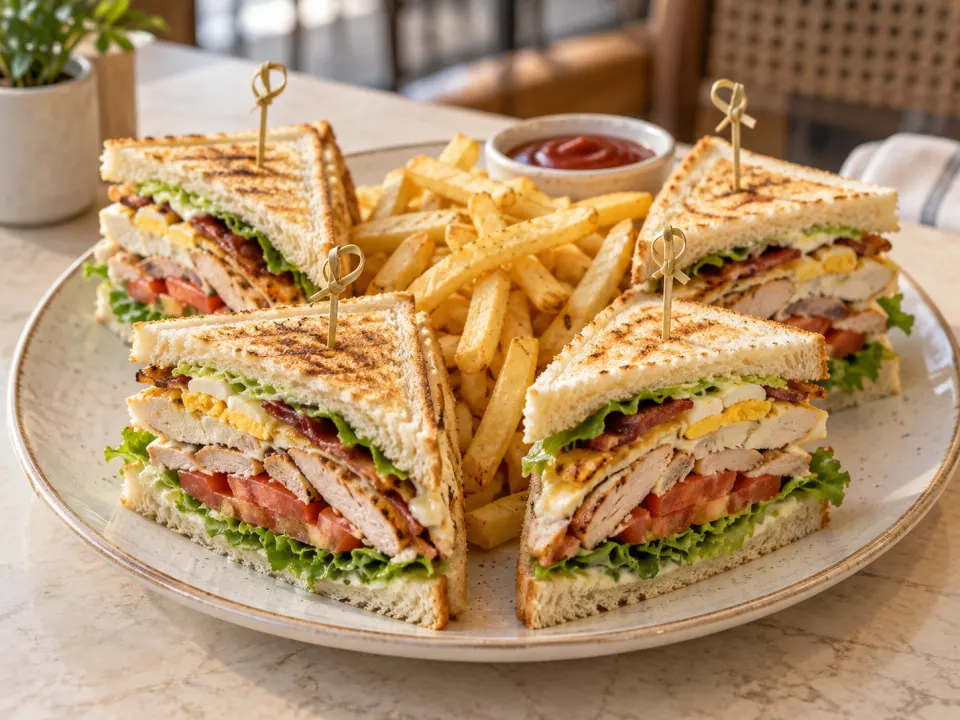
Start with the exact item and ingredient: “Does the standard chicken club, including bread and sauce, contain egg?” This is easier to investigate than “Is the menu safe?” If the answer matters medically, follow with questions about pre-mixed fillings, substitutions and shared equipment. Repeat the item name so the discussion does not drift to a similar dish.
Do not rely on memory from a previous visit. Suppliers and recipes can change, and different branches may use different preparations. A staff member’s inability to confirm should be treated as uncertainty, not as evidence that the ingredient is absent. In that situation, choose a simpler, verifiable alternative or do not order.
Shared preparation can change the risk
Fryers, grills, knives, cutting boards, blenders and serving utensils may be shared. Removing a topping after preparation does not reverse contact that has already occurred. For drinks, a shared blender can matter even when the requested recipe does not list the concerning ingredient. For fried food, a shared fryer may matter more than the visible coating.
The level of precaution depends on the person’s medical circumstances, which this website cannot assess. People with diagnosed allergies should follow advice from an appropriate healthcare professional and communicate directly with the food business. The purpose of this guide is to make the conversation more specific, not to certify any item as allergen-free.
Dietary preferences require clarity too
Vegetarian, vegan, dairy-free and other labels are useful only when their meaning is clear. A vegetable sandwich may contain mayonnaise or cheese; a fruit drink may contain milk or ice cream; fries may share preparation with animal products. Religious or personal dietary requirements can raise additional questions about ingredients and handling.
Use neutral wording and explain what you need rather than expecting a single label to answer every question. A concrete example is: “I avoid dairy. Please check the bread, cheese, butter and sauce in this paratha sandwich.” This invites a component-by-component answer. If the branch cannot verify the build, select a dish with fewer ingredients and simpler preparation.
Quick decision summary
Use a repeatable sequence: name the exact item, name the ingredient, ask about every component, ask about shared equipment, and decide what to do if the answer is uncertain. Do not interpret silence, an old menu or removal of a visible topping as proof. Recheck on every visit because recipes and suppliers change. For a preference, explain the components you avoid. For a diagnosed allergy, follow professional medical guidance and communicate directly with the food business. A simpler dish may be easier to verify, but no page on this website can guarantee that a branch item is allergen-free.
When this guide should be reviewed
Review immediately if the site begins publishing first-party allergen data or accepting orders. That would require a controlled source, ownership, update process and clearer emergency limitations. Until then, the guide must direct readers to current branch confirmation.
Sources and verification
Sources checked on 2026-09-20. Scheduled review by 2027-03-20, or sooner if a material fact changes.