
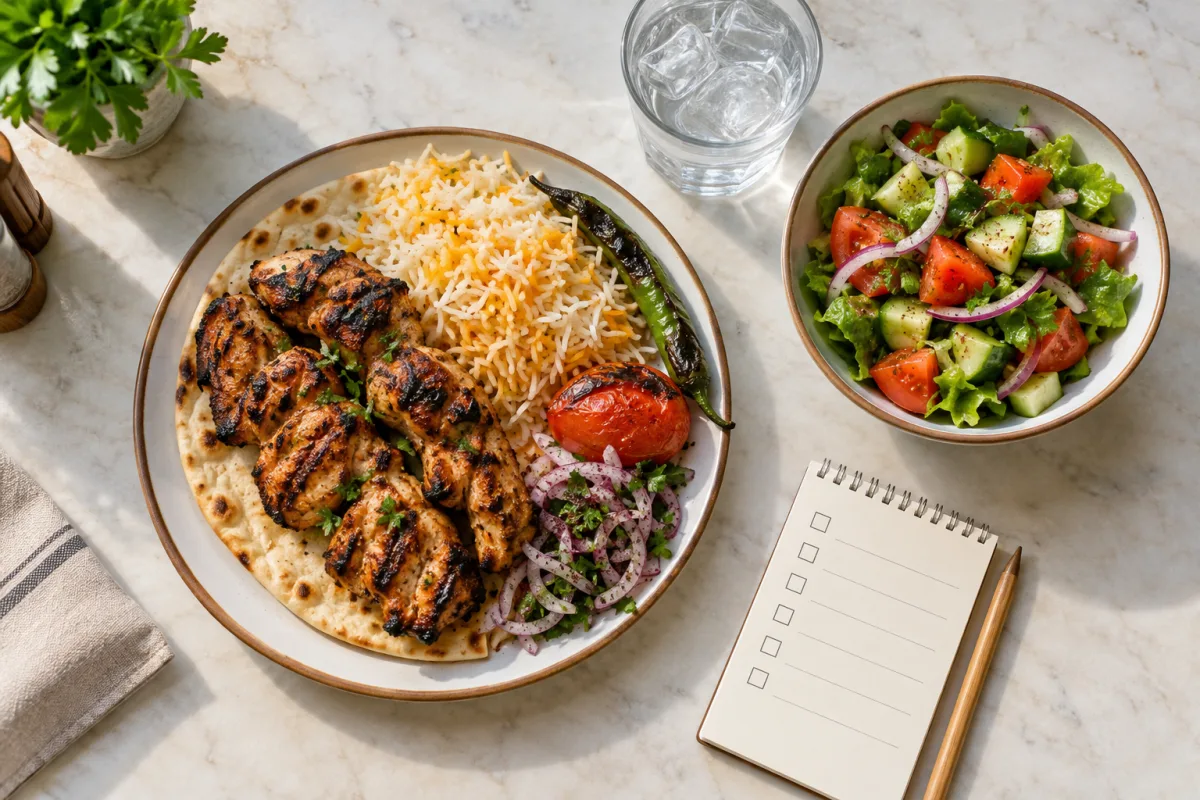
Choose one centre first
Decide whether the centre of the meal is a grill plate, rice dish, burger, wrap or breakfast sandwich. That choice determines which additions are useful. A biryani already supplies a major starch, while a grilled chicken plate may need bread or rice only if neither is included.
Read the complete item description and ask what comes with it. A combo, club sandwich or Arabic shawarma may already include fries, sauce or bread. Adding the same components separately creates cost and food waste without adding variety.
Give every addition a role
A fresh side can add contrast to a rich main; a second starch usually adds volume. A fruit-led drink can accompany a meal, while a milkshake or falooda often functions more like a snack or dessert. Water remains the most predictable hydration choice.
For one adult, a sensible worked example is one charcoal chicken portion, one confirmed included starch, a fresh side and water. Add a dessert only when it is genuinely wanted, not simply because it appears in another section.
Scale for a group
For groups, count diners and dietary constraints before choosing bundles. Select contrasting shared mains, then add one common starch and one fresh side. Drinks are usually easier to choose individually because sweetness, dairy and portion preferences differ.
Keep strict allergen or dietary orders separate and clearly labelled. Shared equipment and preparation practices must be confirmed directly with the selected branch.
Use price snapshots correctly
A marketplace price is a dated branch-and-channel observation, not a universal restaurant price. Delivery fees, promotions and menu composition can change the apparent value. Compare the final basket at the selected branch instead of adding snapshots from different locations.
Decision summary
One centre, one useful contrast and one intentional drink is a reliable starting structure. Confirm included sides, current portion and final channel price before payment.
A six-step checkout audit
Read the basket from the top and assign every item a role: main, starch, fresh side, sauce, drink or dessert. Remove accidental duplicates before judging whether more food is needed. Then check every included component against the separately added items. A burger combo with fries does not need another side by default; a grill plate with bread and salad may already be a complete meal.
Next, match the basket to the number of diners and the actual eating setting. Food eaten immediately can include crisp items that are less suitable for a long journey. Shared food needs serving utensils and an agreed division plan. Finally, confirm the exact branch, current availability, substitution rules, checkout total and estimated handover. This audit is deliberately simple: it improves clarity without pretending to calculate individual nutritional needs or universal portion sizes.
When a second item is justified
A second main is useful when it creates real variety, supports a different dietary need or makes a shared order large enough after the branch confirms portions. It is not automatically useful because it sits in another menu category. Charcoal chicken and a wrap may repeat the same protein and sauces; a contrasting vegetable or rice-based option may serve the group better.
For one diner, decide whether the additional item is for now or later. Food intended for later requires safe storage and reheating guidance appropriate to the item. Do not order perishable food for extended room-temperature holding. For children or smaller appetites, ask whether a smaller format exists instead of assuming an adult combo can be divided cleanly. The responsible decision uses current branch information and current food-safety guidance.
What this framework cannot decide
The framework cannot determine medical suitability, calorie needs, religious compliance, allergy controls or the appetite of a particular person. It also cannot turn a marketplace photograph into proof of a serving size. Those questions require direct evidence from the food business and, where relevant, qualified professional advice.
It can help a diner notice weak assumptions. If the plan depends on a precise quantity, ask for the current portion. If it depends on avoiding an ingredient, name the complete item and ask about bread, sauce, toppings and shared equipment. If it depends on a promotional price, verify the final basket. Clear limits make the guide more useful because they show exactly when the branch must become the source of truth.
Sources and verification
Sources checked on 2026-10-29. Scheduled review by 2027-04-29, or sooner if a material fact changes.
Continue the same task
Related food guides
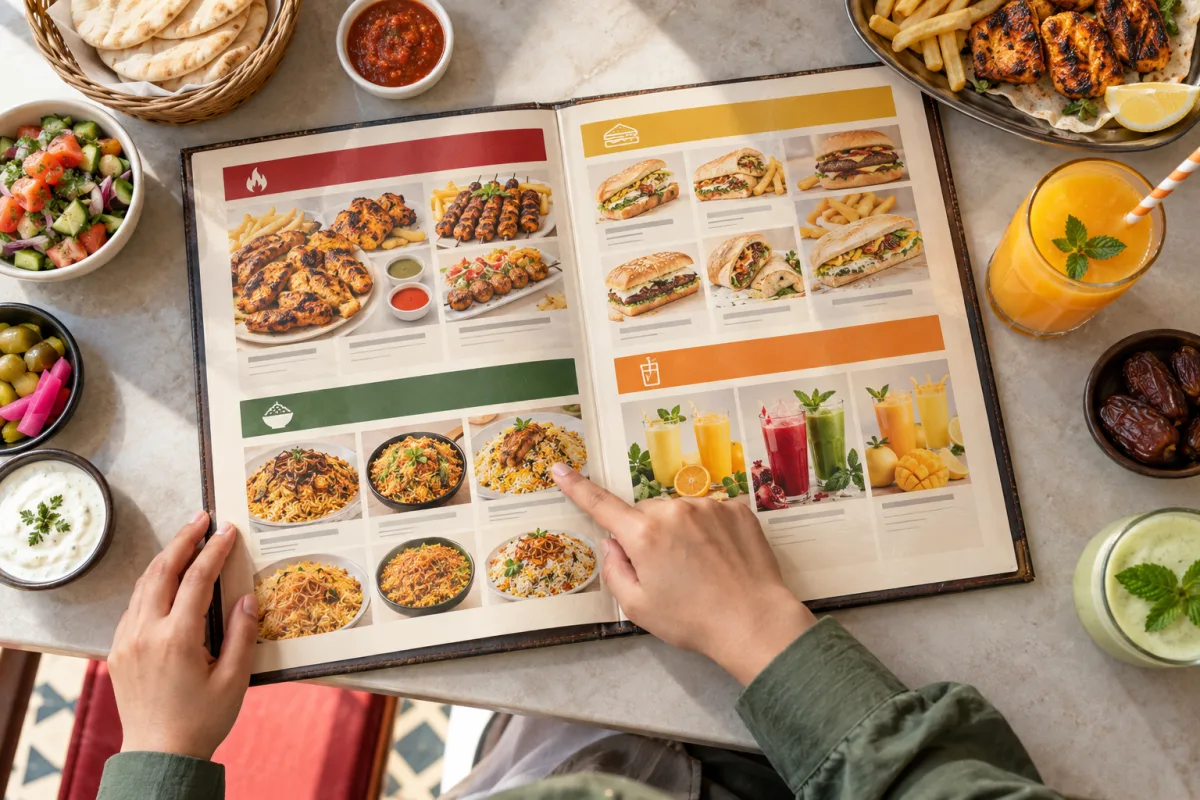
How to Read a Dubai Cafeteria Menu
A practical way to understand the broad menu categories found in Dubai cafeterias and choose a coherent meal.
Read guide →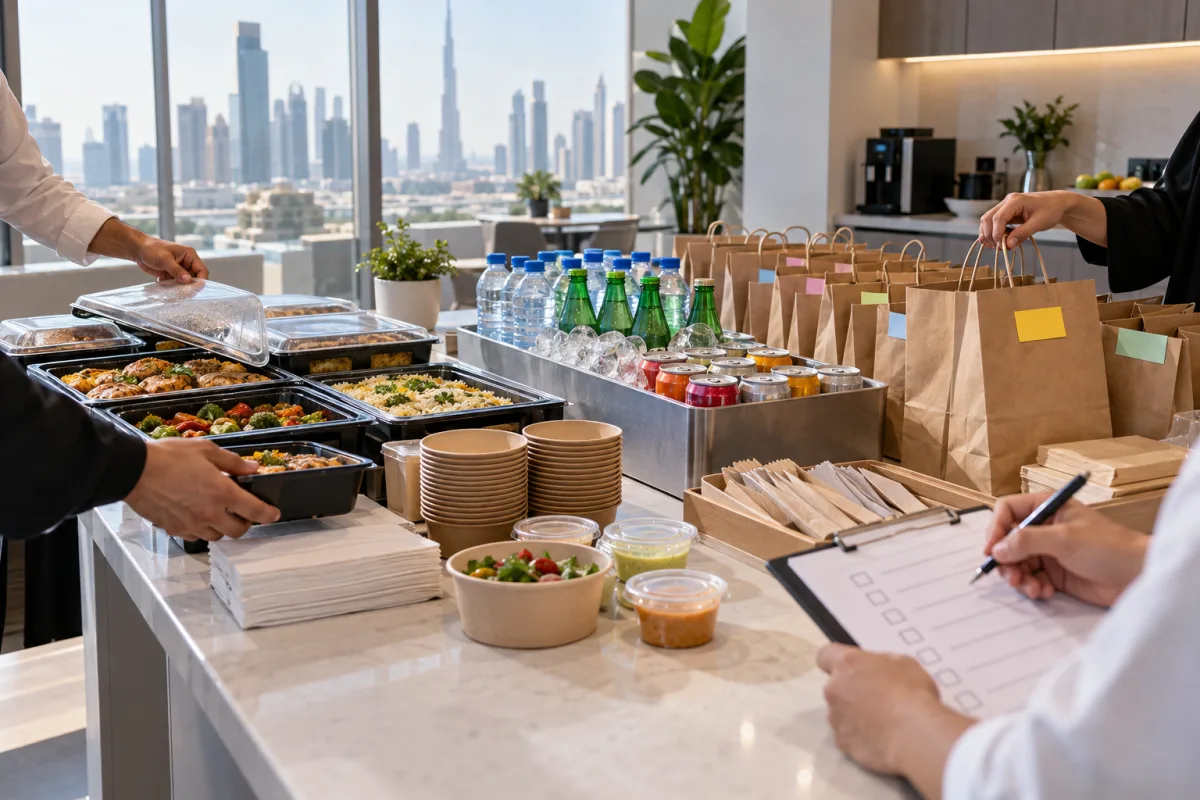
Ordering Food for a Group in Dubai: A Worked Example
Use a simple headcount-and-preference method to build a varied cafeteria order without excessive duplication.
Read guide →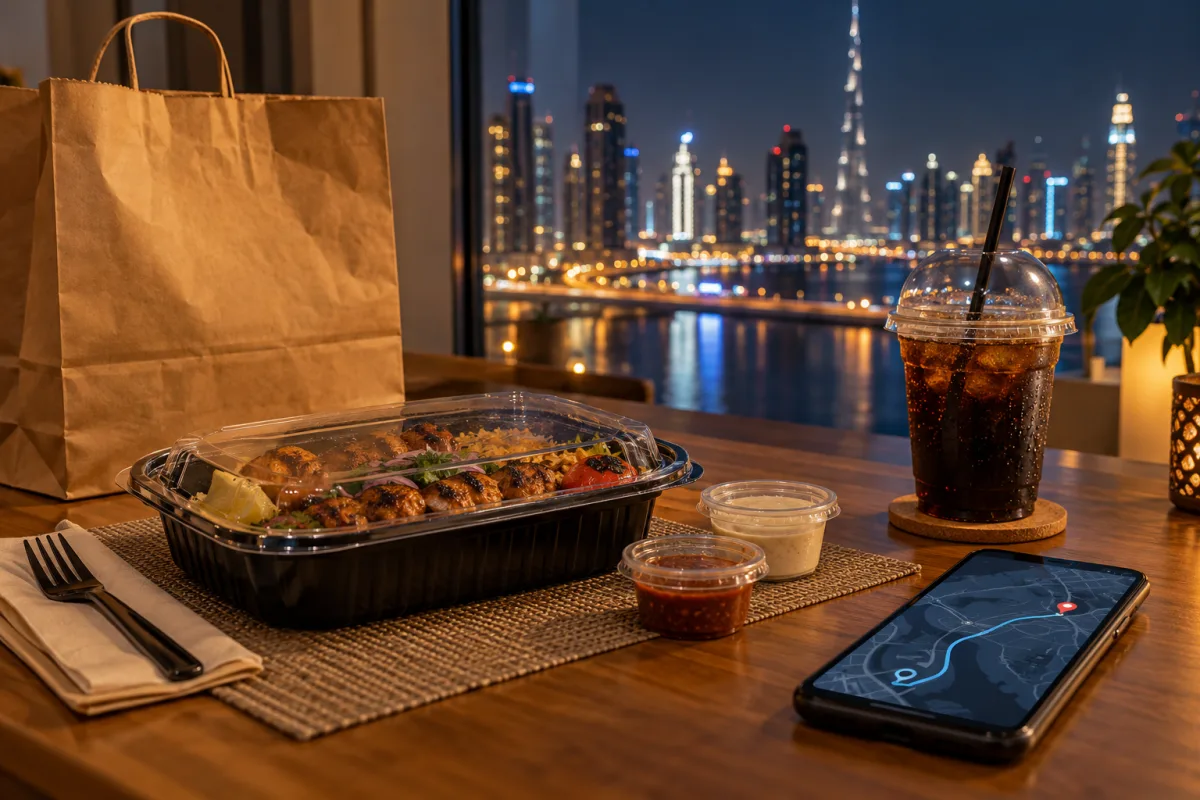
A Late-Night Dubai Cafeteria Ordering Checklist
Check branch identity, current hours, travel time, menu availability and food transport before relying on a late-night listing.
Read guide →